One-Page vs Full Website vs Ecommerce: Which Type of Website Is Right for Your Business in 2026?
Choosing the right website structure feels simple at first.
Until you start researching.
Then suddenly you’re comparing platforms, pricing, SEO potential, ecommerce tools, scalability, hosting, and AI search visibility.
If you’re a founder, consultant, service provider, retailer, or growing SME, you’ve likely asked:
- Should I build a one page vs multi page website?
- Is a simple website for business enough?
- What is the difference between a business website vs ecommerce website?
- Should I invest in WordPress or Shopify?
- How much does a professional website cost in 2026?
These are the same considerations we use at The Subtext when planning websites meant to rank, convert, and scale.
By the end, you’ll know exactly which website structure aligns with your business model, marketing strategy, SEO goals, and growth plans.
Quick Answer: Which Website Type Should You Choose?
Before we go deep into comparisons, let’s simplify it.
Here’s the direct version:
- One-page website → Best for single-offer, early-stage businesses.
- Multi-page business website → Best for service-based SMEs, consultants, and B2B companies.
- Ecommerce website → Best for product-based brands selling online.
If you’re selling services → multi-page usually wins.
If you’re selling products → ecommerce is essential.
If you’re validating an idea → one-page may be enough.
That’s the overview.
Now let’s break down why.
Why Every Business Needs a Website in 2026
A lot of businesses still ask:
“Do I really need a website if I have Instagram?”
Short answer: yes.
Social media platforms are rented land.
Your website is owned digital real estate.
In 2026:
- Customers Google before contacting you.
- AI tools summarize websites before recommending providers.
- Buyers compare 3–5 websites before choosing.
A professional website for business builds:
- Credibility
- Discoverability
- Lead generation
- Sales automation
- Long-term SEO growth
Even referral-based businesses need a digital trust layer.
Without a website, you are invisible to search intent.
What SMEs Should Consider Before Choosing Website Type
Before jumping into design or platform decisions, you need clarity.
Before deciding between a multi page vs single page website, ask:
1. What Is Your Business Model?
- Services only?
- Products only?
- Hybrid?
- Appointment-based?
- Subscription or membership?
Your structure should match how money flows into your business.
2. How Long Is Your Sales Cycle?
Short cycle → less content needed
Long research cycle → deeper content required
If customers need comparison, proof, and explanation, you need multiple pages.
3. Will SEO Be a Growth Channel?
If yes, you likely need multiple pages.
A single page limits keyword coverage.
4. What’s Your Growth Plan for 2–3 Years?
Build for where you’re going, not where you are today.
Website structure is not just about launch.
It’s about longevity.
Types of Websites SMEs Can Choose From
Now that you’re thinking strategically, let’s look at the structural options available.
|
Type |
Best For |
SEO Depth |
Scalability |
|
One-page website |
Single offer |
Limited |
Low |
|
Multi-page business site |
Service SMEs |
Strong |
High |
|
Ecommerce store |
Product brands |
Very strong |
Very high |
|
Portfolio site |
Creators |
Moderate |
Medium |
|
Booking site |
Clinics, salons |
Moderate |
Medium |
Most businesses fall into the first three categories.
Let’s examine them properly.
One-Page Website
If simplicity is your priority, this is usually the first option considered.
What Is It?
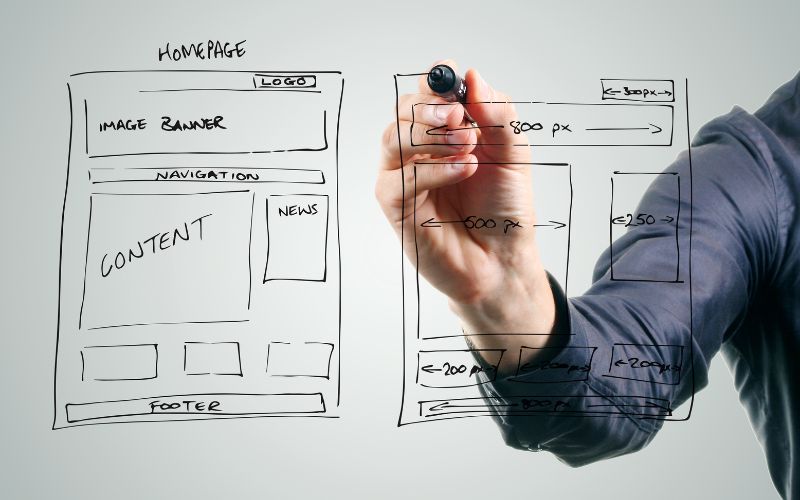
A single scrolling page structured with:
- Hero
- About
- Services
- Testimonials
- FAQs
- Contact
Everything exists on one URL.
It’s clean. Focused. Direct.
Pros
- Fast to build
- Lower upfront cost
- Focused messaging
- Clean mobile experience
Best for:
- Solo consultants
- Events
- Single-offer services
- Pre-launch funnels
For early validation, it works.
Cons
However, simplicity has trade-offs.
- Limited SEO reach
- Hard to rank for multiple keywords
- Not scalable
- Difficult to expand into content clusters
If you want to rank for broader terms like web design services for small business, one page will struggle.
When Is a One-Page Website Enough?
Choose it if:
- You offer one service
- You rely on referrals
- You are not investing in SEO yet
- You want something live quickly
But understand this clearly.
Most SMEs outgrow this structure.
Which brings us to the next level.
Full Multi-Page Business Website
This is where serious growth begins.
When people search for:
- website designers for small business
- small business website design services
- wordpress website developer near me
They expect content depth.
And depth requires structure.
What Is a Multi-Page Website?
Typical structure:
- Home
- About
- Services
- Individual service pages
- Blog
- FAQs
- Contact
Each page targets different keyword intent.
Each page strengthens topical authority.
Pros
- Strong SEO structure
- Better keyword targeting
- Scalable
- Supports content marketing
- Builds authority
It gives you room to grow.
Cons
Growth requires effort.
- More planning required
- Higher initial effort
- Needs ongoing updates
But the upside is long-term compounding visibility.
Best For
- Agencies
- Consultants
- Local businesses
- B2B companies
- Professional firms
For most SMEs serious about organic growth, multi-page is ideal.
Ecommerce Website
Now let’s move to a completely different business model.
If revenue depends on transactions rather than enquiries, this matters.
Business Website vs Ecommerce Website
A business website generates leads.
An ecommerce website processes transactions.
Ecommerce includes:
- Cart and checkout
- Payment gateways
- Product catalog
- Inventory
- Shipping integration
- Tax setup
- Security layers
This is infrastructure, not just design.
Pros
- 24/7 sales engine
- Product-level SEO
- Built-in marketing tools
- Automated operations
Revenue happens while you sleep.
Cons
With capability comes complexity.
- Higher complexity
- Logistics coordination
- Compliance and security requirements
- Continuous optimization needed
Best For
- D2C brands
- Retailers
- Manufacturers selling direct
- Subscription products
If you’re researching shopify website development cost, you likely need ecommerce.
One Page vs Full vs Ecommerce: Side-by-Side Comparison
Now that you understand each structure independently, here’s how they compare.
|
Factor |
One-Page |
Multi-Page |
Ecommerce |
|
SEO Potential |
Low |
High |
Very High |
|
Setup Cost |
Low |
Medium |
High |
|
Scalability |
Low |
High |
Very High |
|
Content Depth |
Limited |
Strong |
Strong |
|
Best For |
Single offer |
Services |
Products |
|
Maintenance |
Low |
Medium |
High |
Choosing between one page vs multi page website depends on where your business sits today and where it’s heading.
Cost Comparison: One-Page vs Multi-Page vs Ecommerce Website in 2026
Cost is one of the biggest deciding factors.
But cost without context can be misleading.
One-Page Website
Includes:
- One structured layout
- Basic form integration
- Mobile optimization
Lower investment.
Multi-Page Website
Includes:
- 5–12 pages
- Service pages
- Blog setup
- SEO structuring
- Speed optimization
- Technical setup
Moderate investment with higher long-term ROI.
Ecommerce Website
Includes:
- Product and category pages
- Payment gateway integration
- Shipping logic
- Checkout setup
- Security layers
- Tax configuration
Highest investment due to functionality depth.
The real question is not what is cheapest.
It is what supports revenue growth.
Does Google Rank Single-Page Websites?
Yes, Google can rank single-page websites.
However, ranking performance depends on keyword competition and content depth.
In 2026, if SEO is done right, single-page websites can rank well for:
- Brand terms
- Niche services
- Local intent searches
But for broader or competitive commercial terms like “web design services for small business” or “wordpress website developer near me,” multi-page websites typically perform better because they allow clearer keyword segmentation and stronger internal linking.
Single-page websites are not penalized. They are simply more limited in ranking breadth.
What Every Modern Website Must Have
Regardless of structure, certain fundamentals are non-negotiable.
- Clear value proposition
- Strong CTA
- Testimonials
- Mobile-first design
- Fast loading
- SSL security
- Legal pages
These are trust foundations.
Without them, structure alone does not matter.
Essential Pages by Business Type
Structure must reflect how customers think.
Service Businesses
- Home
- Services
- Individual service pages
- About
- Testimonials
- Blog
- Contact
Local Businesses
- Home
- Services
- Location
- Reviews
- FAQs
- Contact
Ecommerce
- Home
- Category pages
- Product pages
- Shipping
- Returns
- FAQs
- Blog
Clarity reduces friction.
What Makes a Good Website in 2026?
Regardless of whether you choose a one-page website, multi-page business website, or ecommerce structure, certain standards define a strong website in 2026.
A good website today must do more than “look professional.” It must perform technically, structurally, and strategically.
Here are the non-negotiables:
1. Clear Positioning Above the Fold
Visitors should immediately understand:
- Who you help
- What you offer
- Why it matters
- What action to take next
Confusion reduces conversions.
2. Mobile-First Performance
More than half of business traffic comes from mobile devices. A good website must:
- Load quickly
- Maintain clean layout on smaller screens
- Avoid intrusive popups
- Pass Core Web Vitals benchmarks
Mobile usability directly impacts ranking.
3. Fast Loading Speed
Page speed affects:
- SEO
- Bounce rate
- Conversion rate
Optimized hosting, compressed images, caching, and clean code are essential in 2026.
4. Structured Content and Clear Hierarchy
Search engines and AI systems interpret structure through:
- Logical headings (H1, H2, H3)
- Internal linking
- Organized service pages
- FAQ sections
A good website is easy to read for both humans and search engines.
5. Trust Signals
Modern buyers look for validation.
A strong website includes:
- Testimonials
- Case studies
- Certifications
- Real team visibility
- Clear contact information
Trust increases dwell time and conversion.
6. Technical SEO Readiness
At minimum:
- XML sitemap
- Clean URLs
- Schema markup
- Secure HTTPS
- No broken links
Without technical readiness, even good content struggles to rank.
7. Scalability
A website built in 2026 should allow:
- Adding new services
- Publishing content
- Expanding into ecommerce
- Targeting new markets
A good website is not static. It is designed for growth.
SEO Foundations for All Website Types
Structure without SEO is invisible.
If you want to rank for:
- wordpress website designer
- web design services for small business
- small business website design services
You need strategic SEO.
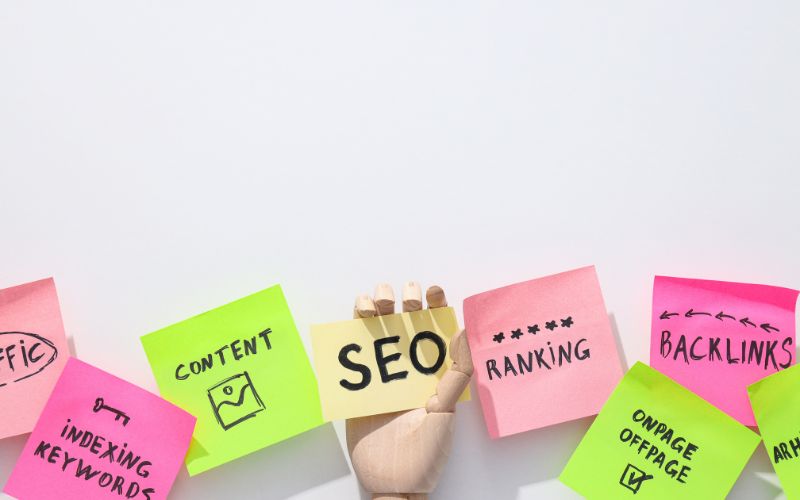
On-Page SEO
- Unique titles
- Meta descriptions
- Structured headings
- Internal links
- Optimized images
Technical SEO
- Sitemap
- Mobile responsiveness
- Clean URLs
- Fast hosting
- Schema markup
Ecommerce SEO
- Category optimization
- Product schema
- Search-friendly filters
- Strong internal linking
SEO compounds over time.
How Keyword Mapping Works in One-Page vs Multi-Page Websites
Search engines rank URLs, not entire websites.
In a one-page website, all keyword targets compete within a single document. This means:
- Multiple service terms share the same ranking space.
- It becomes difficult to rank for distinct commercial queries.
- Topical segmentation is limited.
In a multi-page website, each service or topic gets its own URL. This allows:
- One primary keyword per page.
- Supporting secondary keywords mapped clearly.
- Internal links connecting related topics.
- Stronger topical authority signals.
For example:
A service page can target “web design services for small business.”
A comparison page can target “one page vs multi page website.”
A platform page can target “wordpress website designer” or “shopify web designer.”
This structured keyword-to-page alignment is one of the strongest ranking advantages of multi-page architecture.
What Makes an AI Friendly Website in 2026?
Search is evolving.
AI tools summarize and recommend websites.
An AI friendly website must have:
- Clear page hierarchy
- FAQ sections
- Structured data
- Descriptive service pages
- Logical content grouping
- Entity clarity
Multi-page websites perform better because AI systems prefer structured depth.
Single-page websites provide limited semantic coverage.
Future visibility depends on structure.
Hosting: The Performance Layer Most Businesses Ignore
Even the best-designed website fails on weak hosting.
Slow hosting affects:
- SEO rankings
- Conversion rates
- AI indexing
- User trust
Hosting is infrastructure.
Types of Hosting
Shared Hosting
Budget friendly
Lower performance
VPS Hosting
More scalable
Better speed
Managed WordPress Hosting
Optimized stack
Automatic updates
Security layers
Shopify Hosting
Included and optimized
High uptime
Built for ecommerce
What to Look For In Hosting Services in 2026
- SSD storage
- CDN integration
- Daily backups
- 99.9% uptime
- Core Web Vitals optimization
- Security firewalls
- Scalable server resources
Hosting directly impacts ranking.
It should never be an afterthought.
WordPress vs Shopify: Which Platform Should You Choose?
Platform choice supports structure.
Choose WordPress If:
- You run a service business
- SEO is primary growth channel
- You need blogging flexibility
- You want maximum customization
Choose Shopify If:
- You sell products
- You need stable ecommerce infrastructure
- You want simple inventory management
- Checkout optimization matters
WordPress offers content control.
Shopify offers ecommerce simplicity.
Choose based on model, not hype.

Conversion and UX Essentials
Traffic means nothing without action.
Your website must:
- Have one clear CTA per page
- Guide users logically
- Use visible contact options
- Reduce form friction
- Display trust signals prominently
- Load fast on mobile
Conversion is the real goal.
How Website Structure Affects Buyer Decision-Making
Different structures influence how users make decisions.
In a one-page website, users scroll linearly. This works well when:
- The offer is simple
- The decision is low risk
- The CTA is singular
In a multi-page website, users navigate selectively. They may:
- Compare services
- Read about your process
- Check testimonials
- Review FAQs
- Explore case studies
This structure supports longer decision cycles and higher-ticket services.
In ecommerce websites, structure affects:
- Product discovery
- Filter usability
- Cart abandonment rates
- Checkout friction
Choosing the right structure is not just about SEO. It is about aligning with how your buyers think.
Real-World Decision Guide For Website Development For Small Businesses
Let’s remove all remaining confusion.
If you are:
A consultant with one offer → One-page site, plan upgrade later.
An agency or clinic → Multi-page structure with service SEO.
A product brand → Ecommerce from day one.
Hybrid business → Multi-page + ecommerce integration.
Planning long-term SEO growth → Multi-page structure immediately.
Clarity creates confidence.
When Should You Upgrade Your Website Structure?
Growth changes needs.
Upgrade from one-page when:
- You add new services
- You want SEO expansion
- You launch a blog
- You expand locations
Add ecommerce when:
- You want direct sales
- You want customer data control
- You want automation
Website evolution should be intentional.
Planning for Long-Term SEO Scalability
Website structure should support future expansion.
As your business grows, you may want to:
- Add new services
- Publish blog content
- Target additional keywords
- Expand into new markets
- Add ecommerce functionality
Multi-page architecture supports this naturally because it allows new pages to be added without restructuring the entire site.
One-page websites often require full re-architecture when growth begins.
If long-term organic visibility is part of your strategy, structure should be chosen with scalability in mind.
Website Readiness Checklist
Before launching or upgrading, validate fundamentals.
Strategy
- Structure aligns with business goals
- Clear audience defined
Content
- Core pages complete
- Objections addressed
Technical
- SSL active
- Backups enabled
- Hosting optimized
SEO
- Unique meta per page
- Logical heading structure
- Internal links present
- Sitemap submitted
Checklists prevent weak launches.
Future-Proofing Your Website Beyond 2026
Digital behavior will continue evolving.
Design for growth.
- Start structured
- Avoid thin pages
- Add FAQ clusters
- Expand content authority
- Update regularly
- Maintain technical performance
A good website evolves with your business.
Most Asked Questions About Website Development For Small Businesses
Is a one-page website enough for a small business?
A one-page website can be enough for small businesses that offer a single service, operate locally, or are validating a new idea. It works well when the decision cycle is short and most leads come from referrals or paid advertising rather than organic search. However, because all content lives on one URL, keyword targeting and long-term SEO scalability are limited. Businesses planning to grow their services, invest in content marketing, or rank for multiple search terms typically benefit more from a multi-page website structure.
What is better: multi page vs single page website?
A multi-page website is generally better for businesses that want stronger SEO performance, clearer service segmentation, and long-term scalability. Search engines rank individual URLs, so having separate pages for services, blogs, and comparisons allows better keyword targeting and internal linking. A single-page website can work for focused offers or early-stage businesses, but it limits ranking breadth. If organic traffic and expansion are part of your strategy, a multi-page website provides more structural flexibility and ranking potential.
What is the difference between a business website vs ecommerce website?
A business website is designed to generate enquiries, bookings, or consultations. It typically includes service pages, testimonials, and contact forms. An ecommerce website, on the other hand, allows users to browse products, add them to a cart, and complete secure transactions through payment gateways. Ecommerce sites include inventory systems, checkout processes, shipping logic, and tax configuration. If your revenue comes primarily from direct online sales, you need ecommerce functionality. If your revenue comes from leads or consultations, a business website structure is sufficient.
How many pages should a small business website have?
A small business website should have enough pages to clearly represent each service or offering. At minimum, most service businesses need a home page, about page, services overview page, individual service pages, and a contact page. Growth-focused businesses often add a blog, FAQs, and case studies to strengthen SEO and authority. The number of pages should reflect your services and keyword targets. If you want to rank for multiple search terms like “web design services for small business” or “wordpress website designer,” separate pages improve targeting and ranking potential.
How much does a small business website cost in 2026?
The cost of a small business website in 2026 depends on structure, functionality, and platform. A one-page website typically requires lower investment because it involves fewer design and development hours. A multi-page website costs more due to additional service pages, SEO structuring, and content planning. Ecommerce websites require the highest investment because they include product pages, payment gateway integration, checkout systems, shipping configuration, and security layers. The right budget depends on whether your goal is simple online presence, SEO-driven growth, or direct online sales.
How much does Shopify website development cost?
Shopify website development cost varies based on customization level, number of products, integrations, and design complexity. A basic Shopify store with a standard theme and limited products requires less investment than a fully customized ecommerce website with advanced filtering, custom checkout logic, and third-party integrations. Additional costs may include premium themes, apps, payment gateway fees, and ongoing optimization. Businesses evaluating Shopify should consider both initial development costs and long-term operational expenses when budgeting for ecommerce.
Which platform is better: WordPress or Shopify?
The better platform depends on your business model. WordPress is ideal for service-based businesses that rely on SEO, content marketing, and flexible customization. It allows full control over structure, blog publishing, and keyword segmentation. Shopify is designed specifically for ecommerce and simplifies product management, checkout processes, and payment integrations. If your primary goal is content-driven lead generation, WordPress is often more flexible. If your primary goal is selling products online with secure transactions, Shopify provides streamlined infrastructure.
Does Google rank single-page websites?
Yes, Google can rank single-page websites. However, ranking performance depends on keyword competition, content depth, and overall authority. Single-page websites can rank well for brand searches, niche services, or localized queries. But for competitive commercial terms such as “web design services for small business” or “wordpress website developer near me,” multi-page websites often perform better because they allow clearer keyword segmentation and stronger internal linking. Single-page websites are not penalized, but they are more limited in ranking breadth.
Can I convert a one-page website into a multi-page website later?
Yes, a one-page website can be expanded into a multi-page website as your business grows. However, restructuring requires careful planning to preserve SEO value. This includes setting up proper URL structures, implementing redirects if needed, reorganizing navigation, and updating internal links. If growth and organic visibility are part of your long-term strategy, planning a scalable architecture from the beginning reduces future migration complexity.
What makes a website AI friendly in 2026?
An AI friendly website is structured clearly so search engines and AI systems can interpret its content easily. This includes a logical heading hierarchy, well-organized pages, FAQ sections, internal linking, schema markup, and descriptive service pages. Multi-page websites generally perform better in AI-driven search environments because they create clear topic clusters and entity relationships. Clean structure and contextual clarity improve how AI systems summarize and recommend your business.
Is ecommerce better than a regular business website?
Ecommerce is better only if your business model requires direct online transactions. It provides 24/7 sales capability, product-level SEO opportunities, and automated order processing. However, ecommerce also requires more complex setup, payment compliance, and ongoing optimization. For service-based businesses that rely on consultations or enquiries, a structured multi-page business website is often more appropriate and cost-effective.
Build the Right Website Strategy
A website is not just a design decision.
It is a business decision.
At The Subtext, we approach websites strategically.
We don’t just design.
We align structure with:
- Business goals
- SEO growth
- Conversion strategy
- Long-term scalability
- AI discoverability
Whether you need:
- A focused one-page site
- A scalable multi-page business website
- A conversion-driven ecommerce store
We build websites that rank, convert, and grow with your business.
If you’re serious about building a digital asset and not just launching a website, it’s time to build it right.